Information

Wer the Saber Moss Tiger
Osiris
The
 Angelic Telenine
Owner: Sekhmet
Age: 12 years, 3 months, 2 weeks
Born: May 30th, 2014
Adopted: 12 years, 3 months, 2 weeks ago
Adopted: May 30th, 2014
Statistics
- Level: 45
- Strength: 68
- Defense: 15
- Speed: 22
- Health: 23
- HP: 12/23
- Intelligence: 170
- Books Read: 114
- Food Eaten: 0
- Toys Played: 0
- Job: Master Gardener
“Blessed be Osiris.
He hears the prayers of all men, animals, Bas.
He hears the dead murmur with their mouths full of sand.
He is light, the White Crown, the joy of heaven and earth.
He is solitude and perfection, the strength of earth.
His body widens and people are welcomed into it;
His embrace is sleep.
He is the fire dancing about the heads of dreamers, the instant of forever which sparks poet and lovers.
He is the mind of the ibis, the instinct of animals, the strength of bone, the pulse of blood.
The living soul of the land, he is matter and mind taking form.
He is what he imagines, divine, a spark thrown into dust.
He is a star in a dark tomb, a shadow cast by sunlight.
He is life that cannot be contained." - Hymn to Osiris
Perhaps, with Isis, Osiris is the best-known figure from ancient Egyptian mythology, featuring prominently in both monarchical ideology and popular religion as a god of death, resurrection, and fertility for over 2,000 years.
Betrayed and murdered by his jealous brother Set, Osiris was resurrected by his wife Isis, begat his reborn-self Horus, and became the god of the afterlife.
Osiris became one of the most important of Egyptian gods because he symbolized the triumph of life over death. The Egyptian religion didn’t emphasize eternal punishment for sin - Egypt’s savior Osiris came to save humanity not from everlasting torture, but from death. A New Kingdom prayer states that Osiris is the greatest of the gods because all Egyptians come to him in the end.
The ancient Egyptians thought that when people died they became an “Osiris,” becoming one with the god after death. Egyptian scriptures said, “As truly as Osiris lives, so truly shall his follower live; as truly as Osiris is not dead he shall die no more; as truly as Osiris is not annihilated he shall not be annihilated.”
In the worship of Osiris, living an exemplary life was more important than wealth in ensuring an individual's access to eternity. The afterlife was not limited to royalty - good actions and a righteous life made immortality accessible even to the humblest worshiper. Amulets of Osiris were buried with the dead.
All men were thought to "become" an Osiris - to become one with the god after death (women were associated with Isis or Hathor instead.) The faithful claimed on their tombs that "I have become a divine being by the side of Osiris, I am brought forth by him, I renew my youth."
Osiris was associated with grapes, which must be crushed and destroyed in order to make wine. Wine was sometimes called the “Blood of Osiris.” A Middle Kingdom royal ritual equates Osiris with barley and Set with the donkeys who thresh the grain by trampling on it. Images on temple walls show grain growing out of the body of the dead Osiris while his soul hovers above the stalks.
“Corn mummies” of seeded dirt (barley and Nile mud) formed in the shape of Osiris were placed in tombs to germinate in the darkness, demonstrating Osiris’s power - these mummies were called “Osiris Beds.” An entire sprouting barley plant was left in the sarcophagus of Amenophis I.
During the Festival of the Resurrection of Osiris, bread was baked in the shape of the god and distributed to worshipers. Since the ancients believed that humans were whatever they eat, this sacrament was, by extension, able to make them celestial and immortal. The doctrine of the Devoured Host ultimately has its roots in prehistoric cannibalism, whose practitioners believed that the virtues and powers of the eaten would thus be absorbed by the eater. This phenomenon has been described throughout the world.
Osiris was thought to be the son of Nut and Geb, the brother of Nephthys and Set, the brother-husband of Isis, and the father of Horus, Sopdet, Khonsu, Sopedu, and Anubis (by Nephthys.) Sometimes he was considered to be the son of Amun and Taweret.
Credits
❖ Story by Sekhmet with information from these sources
❖ Background photo from Hasmik Ghazaryan Olson
❖ Profile by Balloon
Pet Treasure

Ankh

Tutankh

Scarab of the Pharaohs

Wheat

Spring Growth Sticker

Fake Grapes

Red Wine

Willow Twig

Obelisk Tombstone
Pet Friends
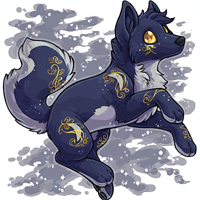
Nut
I will rest forever in your skies.

Geb
Nods Father.
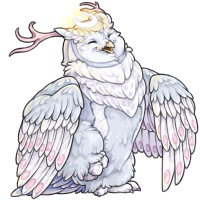
Isis
My lovely, clever wife.
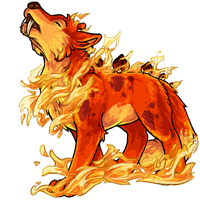
Horus
A child of magic, born after my death!
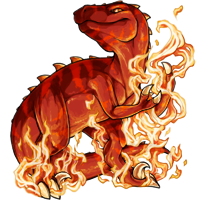
Set
Why did you do it, Brother?

Anubis
. . . You are also my son?

Nephthys
What - how - a disguise?
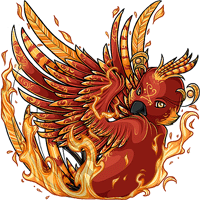
Bennu
My soul, my Ka.
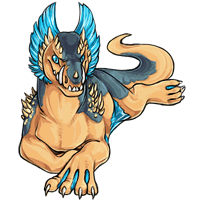
Sobek
sighs Did you really have to eat THAT part?