Information

Har-Wer the Veegle
Horus
The
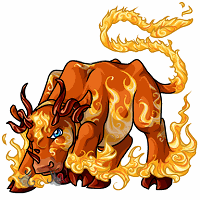
 Reborn Telenine
Owner: Sekhmet
Age: 13 years, 4 days
Born: September 13th, 2013
Adopted: 13 years, 4 days ago
Adopted: September 13th, 2013
Statistics
- Level: 50
- Strength: 79
- Defense: 17
- Speed: 15
- Health: 16
- HP: 11/16
- Intelligence: 172
- Books Read: 127
- Food Eaten: 0
- Toys Played: 0
- Job: Ember Tender
“I am life rushing on, born from the egg of the world, born from the belly of a magic woman, born of my father's dreams.
I am the screech of wind, the rush of falcon wings, talons sharp as knives.
I came after you.
I stand before you.
I am with you always.
I am the power that dispels darkness.
The seed laid into the void must grow.
The candle's only purpose is to shine in the darkness.
Bread is meant to be ground to pulp in the teeth.
The function of life is to have something to offer death.
A man forgets, but his heart remembers - the love and the terror, the weeping, the beating of wings." - Hymn of Horus
Horus was so important to the Egyptian religion that pharaohs were considered his human manifestation. “Horus-in-the-Nest" was a term used to designate the heirs to the throne. Each pharaoh adopted a Hr-nwb (golden Horus name) when he took the throne, to connect himself with the god. When the king died, the phrase used to announce his death was "The Falcon has flown home." The pharaoh’s funeral ceremonies included the release of a live falcon to depict the dead king’s soul flying away to its home in heaven.
The hieroglyphic for “god” and “pharaoh” was a falcon on a perch. Horus was also thought to be a war god and a hunter's god, since he was associated so heavily with a fierce bird of prey. Egyptian texts paint a dazzling picture of Horus: "when he opens his eyes he fills the universe with light, but when he shuts them darkness comes into being."
When the Osiris myth became popular, Horus became the patron of young men and was often described as the perfect example of the dutiful son who grows up to become a just man. Weak as a child, Horus was nurtured by his mother Isis and grew into manhood.
Mythologicaly, the sun and the moon represented the two eyes of Horus. The speckled feathers of his breast were the stars and his wings the sky – with their downsweep producing the winds. It was observed that the light of the moon is much weaker than the sun. This was explained in the Contendings of Horus and Set - during the different contests and skirmishes between the two gods, Horus had one of his eyes gouged out. This is why one of his eyes shines brighter than the other. The Eye of Horus was later restored by Thoth, but it remained weaker than the other, and was constantly attacked each day by Set - explaining the phases of the moon. In some myths, Horus lost not one eye, but both. He wandered lost and blind in the desert, until he was found by the goddess Hathor, who healed him and became his wife.
Horus was thought to have eyes the color of lapis lazuli (very dark blue.) When his rival Set tore out and buried his eye/s, it/they sprouted and bloomed into blue lotuses or grapes. The growth of useful plants from the buried eye/s of Horus is a parallel to the growth of barley and wheat from the body of his father, Osiris. Horus eventually defeated his rival Set, avenged his murdered father Osiris, and became the great pharaoh of Egypt. An Egyptian proverb states "Although Horus hid and trembled in the marshes, he became the ruler of the earth in turn."
The Speech of Horus says: “I am Horus, the Great Falcon. My flight has reached the horizon. I have passed by the gods of Nut. I have gone further than the gods of old. Even the most ancient bird could not equal my very first flight. There is no god who has achieved what I have achieved. I am Horus, whom Isis bore and whose protection was made inside the egg. I am Horus, Son of Osiris.”
The ancient Egyptians did not differentiate between the different types of falcons - they were all "Horus Falcons," and were thus sacred to Horus.
Horus was thought to be the son of Osiris and Isis. Occasionally Horus’s mother-wife was thought to be Hathor or Selket. Sometimes he was considered to be the son of Banebdjedet, Nut and Geb, Sobek, or Ra.
Credits
❖ Story by Sekhmet with information from these sources
❖ Background photo from Hasmik Ghazaryan Olson
❖ Profile by Balloon
Pet Treasure

Ankh

Reborn Telenine Plushie

Lucky Reborn Telenine Tail

Desert Pharaoh Side Ponytail

Hawk Fire Rock Totem

Hawks Beak

Folded Peregrine Wings
Pet Friends

Geb
I am honored to accept your throne, Grandfather.
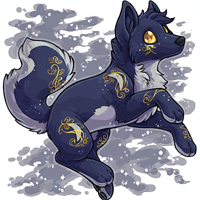
Nut
Watch over Father, please!
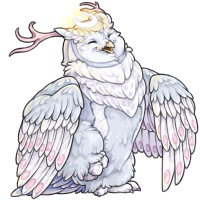
Isis
Dear mother, bless me with your magic!
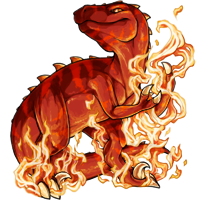
Set
I shall defeat you, uncle!
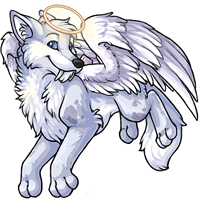
Osiris
I will avenge you, Father.
Hathor
My beautiful wife, who shines like gold!